FORE:Lord Edward Fitzgerald and Mr. Arthur O'Connor, nephew of Lord Longueville, went over to Paris to arrange the invasion. In London, Fitzgerald, his French wife, who accompanied him, and O'Connor, were entertained by members of the Opposition, and dined at the house of a peer in company with Fox, Sheridan, and several other leading Whigs; and Thomas Moore, in his Life of Fitzgerald, more than hints that he made no secret to these patriots of the object of his journey, for he was of a very free-talking and open Irish temperament. The friends of Fox have been inclined to doubt this discreditable fact, but no one was more likely than Moore to be well informed about it; and when Fitzgerald and O'Connor were on their trial, not only Fox, but Sheridan, Lord John Russell, the Dukes of Suffolk and Norfolk, Lords Thanet and Oxford came forward, and gave them both the highest character as excellent, honourable men. These emissaries reached Basle, by way of Hamburg, in the spring of 1797, and there, through Barth¨¦lemy, negotiated with the Directory. The Directory objected to receive Lord Edward Fitzgerald at Paris, on account of his connection with the Orl¨¦ans family through his wife, lest the people should imagine that it was with some design on the Orl¨¦ans estate; he therefore returned again to Hamburg, and O'Connor proceeded to Paris and arranged for the expedition under General Hoche, whose disastrous voyage we have already related. Fitzgerald and O'Connor did not reach Ireland again without the British Government being made fully aware of their journey and its object, from a lady fellow-traveller with Fitzgerald to Hamburg, to whom, with a weak and, as it concerned the fate of thousands, unpardonable garrulity, he had disclosed the whole. Almost simultaneously the arrest of the revolutionary committee of the North disclosed a systematic and well-organised conspiracy. In March, 1797, General Lake proceeded to disarm the revolutionaries in Ulster, and accomplished his task with ruthless severity.On the 14th of January, 1766, the king opened Parliament with a speech, rendered necessary by the change of Ministry and the affairs of America. A great debate followed, in which Burke made his maiden speech, and was followed by Pitt, who said in his loftiest tone of eloquence: "This kingdom has no right to lay a tax upon the colonies. On this point I could not be silent, nor repress the ardour of my soul, smote as it is with indignation at the very thought of taxing America internally without a requisite voice of consent. Taxation is no part of the governing or legislative power. Taxes are the voluntary gift and grant of the Commons alone. At the same time, on every real point of legislation, I believe the authority to be fixed as the pole-star¡ªfixed for the reciprocal benefit of the mother country and her infant colonies. They are the subjects of this kingdom, equally entitled with yourselves to all the rights of mankind and the peculiar privileges of Englishmen, and equally bound by its laws. The Americans are the sons, not the bastards of England. The distinction between legislation and taxation is essential to liberty. The Crown, the Peers, are equally legislative powers with the Commons. If taxation be a part of simple legislation, the Crown, the Peers, have rights in taxation as well as yourselves¡ªrights which they will claim whenever the principle can be supported by might."
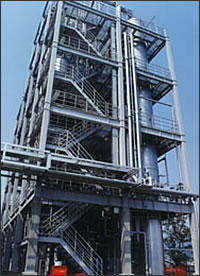
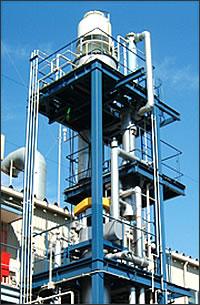
Methanol refinement systems, amyl alcohol refinement systems, ethanol refinement systems, hexanol distillation systems, propanol refinement systems, cyclohexanol distillation systems, isopropanol dehydration systems, ethylene glycol recovery systems, and butanol distillation systems.
FORE:JOSEPH HUME.[See larger version]
Hexane distillation systems, tall oil distillation systems, benzene distillation systems, lubricating oil refinement systems, xylene-free distillation systems, low-boiling gas distillation systems, ethylbenzene recovery systems, fusel oil distillation systems, naphthalene distillation systems, propylene recovery systems, and turpentine oil distillation systems.
FORE:Not at all dismayed by this unrighteous severity, the Scottish Friends of the People met in convention, in Edinburgh, on the 9th of October. At this Convention delegates appeared, not only from most of the large towns of Scotland, but also from London, Sheffield, and Dublin. Letters were also received from the Societies in England. Mr. William Skirving, a friend of Muir and Palmer, as secretary to the Convention, read these letters, and other papers, demanding annual parliaments and universal suffrage. As the British Parliament was considered, and truly, merely a corrupt clique of the representatives of boroughmongers, they proposed to apply directly to the king, that he might urge those necessary reforms on the Legislature.[428] In Scottish fashion, the Reformers opened and closed their sittings with prayer, presenting a striking contrast to the French Revolutionists. On the 6th of November delegates appeared from the Society of United Irishmen, and Margarot and Gerald from the Society of the Friends of the People in London. Margarot stated that five hundred constables had beset the meeting in London, to prevent delegates from getting away to this Convention, but that the manufacturing towns of England were almost all in favour of Reform; that in Sheffield alone there were fifty thousand; that a general union of the Reformers of the United Kingdom would strike terror into their enemies, and compel them to grant annual parliaments and universal suffrage.
Ether distillation systems, camphor distillation systems, epichlorohydrin distillation systems, aniline distillation systems, dioxane refinement systems, acetonitrile distillation systems, furfural refinement systems, formalin distillation systems, cyclohexane distillation systems, monoethanolamine rectification systems, polyglycol ether distillation systems, dimethylformamide recovery systems, acrylic glycol ether distillation systems, acrylonitrile refinement systems, acetone recovery systems, pyridine distillation systems, methyl ethyl ketone recovery systems, picoline distillation systems, methyl isobutyl ketone recovery systems, and acetaldehyde recovery systems.